
Running The System You Survived
People who survived the system are starting to run it. It's a power shift. And it's long overdue.
T.M. Jefferson | www.ctgpro.org | The Power Report
2/1/20263 min read
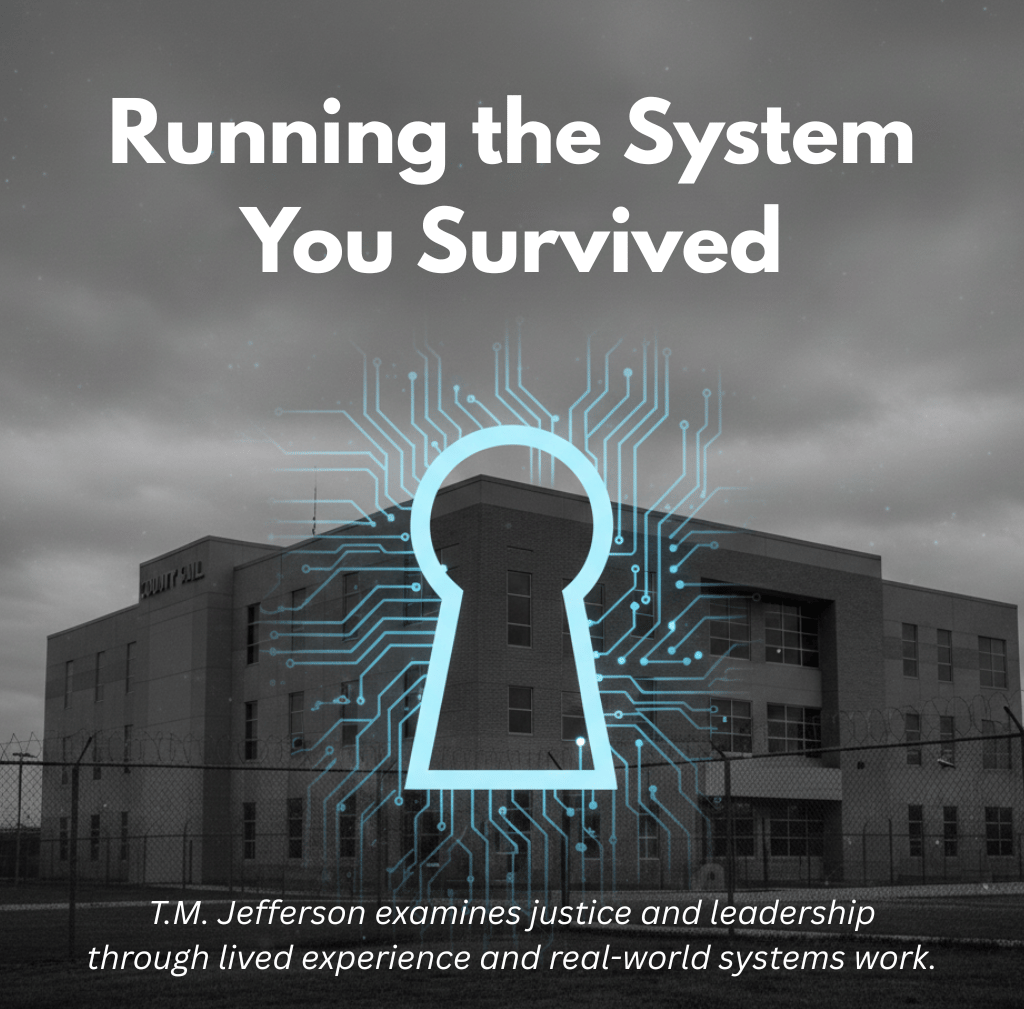
"A formerly incarcerated person was just appointed to run a jail system. Not as a consultant, or a community liaison. As the person in charge. Let that sit for a second."
This Is Different
Corrections has always been run by people with credentials but no lived context. Degrees in criminal justice. Years climbing institutional ladders. Policy expertise. All valuable.
But there's knowledge that doesn't come from a degree program.
There's knowledge that only comes from being on the other side of those bars, understanding how power is felt, and exercised. Knowing what policies look like on paper versus what they do to a human being at 2 a.m. in a cold cell. Recognizing the difference between compliance theater and actual transformation.
This has nothing to do with credentials being bad. It's about acknowledging what's been missing.
You can't design humane systems if you've never experienced inhumane ones.
The Kerwin Pittman Parallel
This isn't the first time we're seeing this kind of reversal.
Kerwin Pittman, once incarcerated, now owns a detention facility. He didn't just buy it as a symbolic gesture. He's running it. Managing it. Making decisions about how people inside are treated.
Different scale than a county appointment. Same signal.
Control is slowly shifting toward people who understand the cost of failure, not theoretically, but intimately.
These aren't feel-good stories. It's a changing of the guards. And they make people uncomfortable for a reason.
A Step Forward (Even With Risks)
I know what people are thinking.
Yes, lived experience alone isn't a qualification. Accountability still matters. This creates tension, and some of it is legitimate.
But systems don't change by protecting comfort. They change by interrupting tradition.
Leadership without lived insight keeps reproducing the same blind spots:
Policies that sound rehabilitative but function as punishment.
Programs built for compliance, not development.
"Success" defined by order instead of growth.
When you've never been on the receiving end of the system, you can't see what you can't see.
Appointing someone who survived that system isn't a risk. Continuing to exclude them is.
The Real Question
The conversation shouldn't be, "Is this person qualified?"
The real question is: Why did it take this long to consider people like this in the first place?
For decades, we've treated formerly incarcerated people as case studies, not colleagues. Cautionary tales, instead of decision-makers. As people who need to be managed, not people capable of managing.
That paradigm is shifting.
Because the people who were once locked out are refusing to stay there.
Progress doesn't always look clean. Sometimes it looks like a door opening that was never supposed to open.
And that's how systems start to move.
What This Signals
We're watching a quiet but critical breakthrough: people who were once managed by the system are starting to manage it.
This is structural.
It means:
The knowledge gap is being acknowledged.
Lived experience is being treated as expertise, not baggage.
Authority is shifting toward people who actually know the terrain.
It also means the stakes are higher. When someone from inside the system rises to run it, failure doesn't just reflect on them, it gets weaponized against everyone who looks like them, everyone who came from where they came from.
That's unfair. But it's reality.
Which is why this can't just be about representation. It has to be about results.
The frameworks have to work. Reforms have to hold and transformation has to be measurable.
Because the world is watching, and they're not all rooting for this to succeed.
No Miracles
These appointments are overdue corrections.
They're what happens when systems stop pretending that the people closest to the problem have nothing to offer the solution.
When "lived experience" stops being treated like a liability and starts being leveraged as strategic insight.
And yes, they're steps forward.
Not the finish line. Not a victory lap. But movement in a direction that's been locked for too long.
If you've been waiting for permission to lead, to build, to claim authority in spaces that told you that you didn't belong, this is your signal.
The door's cracked open.
What you do with that is up to you.


Change The Game Educational Program | www.ctgpro.org | Copyright (c) 2026