The Future of Youth Programming: Why Mindset Change Comes First
My latest blog breaks down why traditional youth programs are failing in 2025, and why CTG's identity-first approach is the answer. We don't modify behavior. We transform mindset. Because when you change how someone sees themselves, everything else follows.
T.M. Jefferson | The Power Report | www.ctgpro.org
10/19/20255 min read
Where Youth Programs Stand, and Why CTG Is More Important Than Ever in 2025
Youth programs are scrambling.
AI is disrupting everything. Mental health crises are spiking. The digital divide is widening. And young people, especially justice-involved youth, are moving through all of this with the same outdated programming we've been running for decades.
Top-down teaching doesn't work anymore. Lecture-based curricula is boring. Motivational speeches without practical tools insult their intelligence.
They want real skills. Real opportunities. Real acknowledgment that their stories mean something and their futures aren't predetermined.
Traditional programming is failing because it was designed for a world that doesn't exist anymore.
What 2025 Demands
Young people today face:
AI-driven career uncertainty - Jobs they're training for might not exist in five years
Social media mental health impacts - Comparison, anxiety, and identity struggles amplified 24/7
Digital skill gaps - Access to technology doesn't equal knowing how to use it strategically
Systemic barriers - For justice-involved youth, every barrier got higher during the pandemic
And we're still running programs built on 20th-century models. Behavior modification. Compliance training. Surface-level skill-building that doesn't address the identity issues underneath.
That's the gap The CTG Educational Program fills.
The Mindset Problem Nobody's Solving
Here's what most youth programs miss: You can't teach someone new skills if they don't believe they're capable of learning them.
You can offer job training to someone who sees themselves as unemployable, but they won't retain it. You can teach financial literacy to someone who believes "people like me don't build wealth", but it won't stick. You can provide leadership development to someone who's spent their entire life being told they're a problem, and they won't lead.
Behavior follows belief. Identity drives action.
Traditional programs try to change behavior while leaving the underlying identity untouched. That's why 67% of people return to prison within three years despite completing "rehabilitation" programs. The programming taught them new skills, but never addressed the fundamental question: Who do you believe you are?
Why CTG Puts Mindset First
The Change The Game Educational Program starts where most programs end: with the story you tell yourself about who you are and what you're capable of.
Module 1 is identity work.
Before we talk about leadership, financial literacy, or career paths, we ask:
What are your core values?
How has your environment shaped your beliefs about yourself?
What limiting narratives are you carrying?
Who told you those stories, and do they serve your future?
Because once you change the foundation, once someone stops seeing themselves as "a kid from a broken home" or "someone who made mistakes" and starts seeing themselves as "someone capable of strategic thinking and intentional growth", everything else becomes possible.
Mindset transformation is the nucleus. Everything else orbits around it.
Identity Transformation = Sustainable Change
CTG operates on one principle: Change the story, and you change the outcome.
Here's what that looks like in practice:
Week 1-3: Change Your Mindset
We don't motivate. We deconstruct. Participants examine the narratives they've inherited, identify who shaped those beliefs, and begin recognizing patterns they've been unconsciously repeating.
The shift: From "This is who I am" to "This is who I've been taught to be, and I can choose differently."
Week 4-6: Change Your Moves
Only after identity work begins do we address behavior. Because now participants understand why they make certain choices. They're not just breaking bad habits, they're rejecting old narratives and building new patterns aligned with who they're becoming.
The shift: From "I can't change" to "I can build new habits when I understand what drives the old ones."
Week 7-9: Change Your Influence
Leadership development only works when someone believes they're worth following. Personal branding only matters when you see yourself as someone with value to offer. We build these skills on the foundation of transformed identity.
The shift: From "Nobody listens to people like me" to "I have a voice, a vision, and the skills to communicate both."
Week 10-12: Change Your Impact
Financial literacy. Legacy planning. Long-term vision. These concepts don't resonate with someone still operating from a survival mindset. But when you've reconstructed your identity? Suddenly building wealth, creating opportunities, and leaving something behind becomes not just possible, but logical.
The shift: From "I'm just trying to survive" to "I'm building something that outlasts me."
The most valuable skill is adaptability rooted in self-knowledge.
When you know who you are, you can learn anything.
When you believe you're capable, obstacles become problems to solve rather than proof of limitation.
When your identity is grounded in strategic thinking rather than circumstance, you navigate uncertainty with confidence.
That's what mindset transformation creates. That's why CTG works.
The Practical Application
This isn't abstract psychology. It's systematic transformation with measurable outcomes.
Student-Led Discovery - CTG doesn't tell participants who they are. It asks questions they answer for themselves through structured exercises and guided reflection.
Narrative Reconstruction - Through storytelling frameworks, participants examine their life experiences and rewrite the meaning they've assigned to those events.
Strategic Skill-Building - Once identity work begins, we introduce practical tools: decision-making frameworks, financial planning, communication strategies, leadership principles.
Holistic Integration - Every skill taught connects back to identity. Financial literacy isn't just about budgets, it's about seeing yourself as someone who manages resources strategically. Leadership isn't just about influence, it's about recognizing you have value worth sharing.
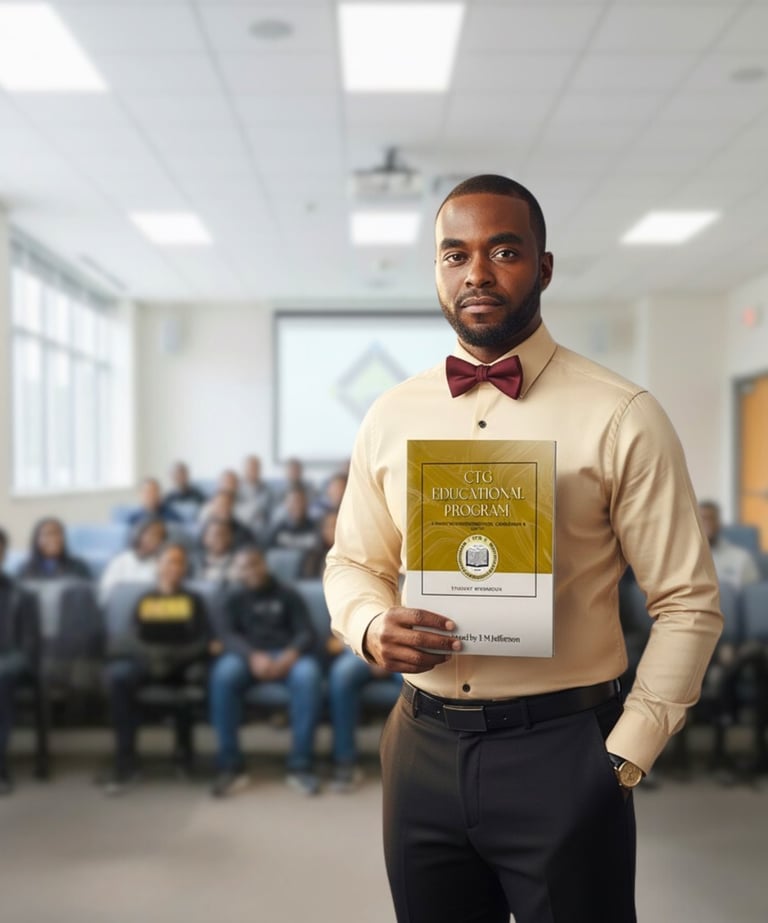
Flexible Delivery - The 118-page workbook adapts to any setting: correctional facilities, classrooms, community centers, independent study. The program meets young people where they are because the work happens internally first.
The Stakes
In 2025, youth programs must:
Address mental health without pathologizing struggle
Prepare young people for unpredictable futures
Empower marginalized voices authentically
Bridge digital divides while teaching critical thinking
What This Means Right Now
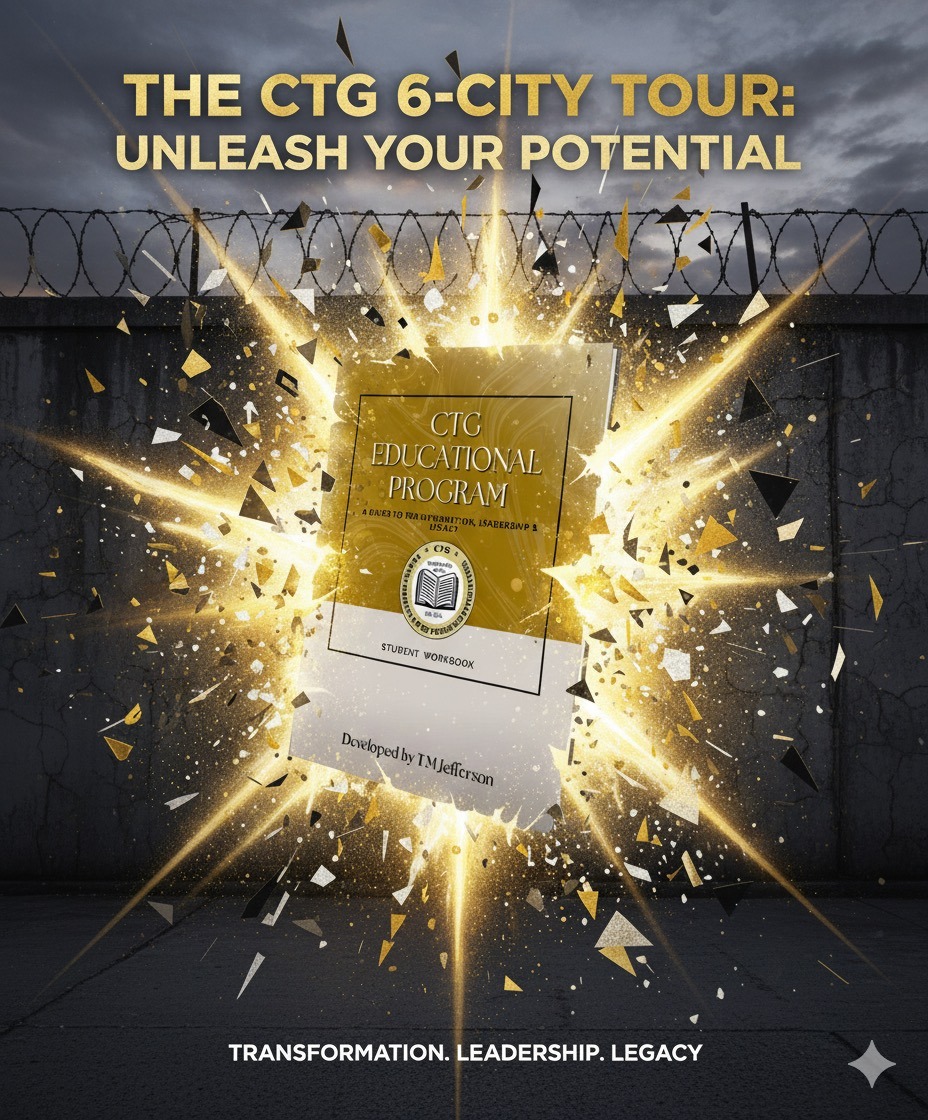
The CTG 6-City Tour launches May 2026 to prove this model works at scale. Six cities. 300 participants. $12,000 to fund transformation that costs $40 per person instead of the $35,000/year we spend incarcerating them. But the larger mission is showing that real youth programming in 2026 must start with identity transformation, not behavior modification.
Traditional models served their purpose. That purpose is over. Young people deserve programs that respect their intelligence, address their actual circumstances, and equip them with unshakeable self-knowledge that enables every other skill they'll need.
CTG isn't the only answer. But it's an answer that understands transformation doesn't start with what you do, it starts with who you believe you are.
Change the mindset. Change the moves. Change the influence. Change the impact.
That's not just a curriculum structure. That's the sequence of sustainable transformation. In 2025, youth programs succeed when they stop trying to fix behavior and start addressing the beliefs that drive it. That's not aspirational language. That's the work.
Support the CTG 6-City Tour:
Learn more: www.ctgpro.org

Change The Game Educational Program | www.ctgpro.org | Copyright (c) 2026