

The System is Investing in Cages. I'm Asking You to Invest in Freedom
Prison reform is everywhere in the news. Federal grants restored. New programs launching. But 67% of people still return to prison within three years, and nobody's asking why.
EDUCATIONGOVERNMENT POLICIESFUNDRAISERPRISON REFORM
T.M. Jefferson | The Power Report | www.ctgpro.org
10/8/20253 min read


You're reading headlines about prison reform. Federal initiatives. State task forces. Pell Grant reinstatement. Expanded education access for 760,000 incarcerated people. It all sounds good on paper. Progress, right?
But here's what those headlines don't tell you: most of these programs still treat symptoms while ignoring the disease.
The Problem With "Reform"
The Federal Bureau of Prisons is limiting solitary confinement. Great. States are mandating educational assessments. Wonderful. Pell Grants are back for incarcerated students. Long overdue.
But here's the question nobody's asking: What kind of education are we providing?
Job training teaches skills. College courses build knowledge. Anger management addresses reactions. All valuable. All necessary.
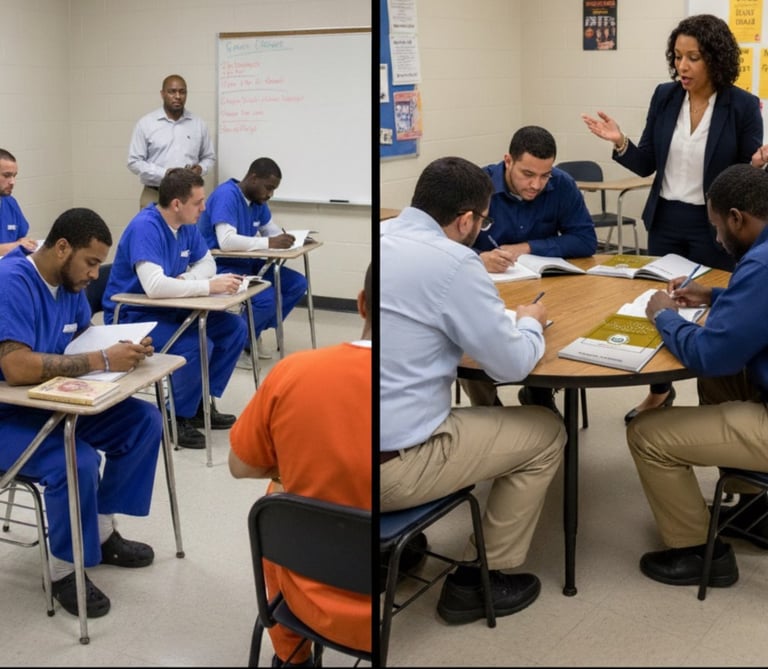
None of them answer the fundamental question that determines whether change lasts: Who do you believe you are?
That's the gap CTG fills.
What "Expanded Access" Actually Means
760,000 people now have access to Pell Grants for college coursework while incarcerated. The headlines celebrate this number like it's transformation at scale.
But access to education isn't the same as education that transforms.
You can teach someone accounting, welding, or computer programming without ever addressing the narrative they tell themselves about their capabilities, their potential, or their identity. They learn the skill, serve their time, get released, and return to the same environment, the same influences, the same mindset that led to incarceration initially.
67% of them return within three years. The number hasn't budged despite decades of programming.
The Wisconsin Model and Others Like It
Wisconsin is piloting associate degree programs inside prisons. Connecticut mandates needs assessments. States are forming commissions and task forces dedicated to strengthening reentry.
This is progress. I'm not dismissing it.
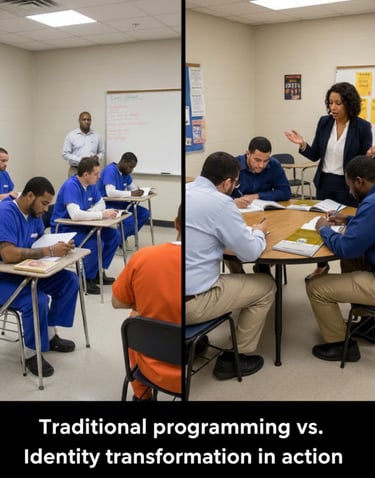
But most of these initiatives operate on the behavior modification model. They assume people make poor choices because they lack skills, credentials, or opportunities. Fix those deficits, the theory goes, and behavior changes.
CTG operates differently. We recognize that sustainable behavior change requires identity transformation.
When you change how someone sees themselves, when they stop identifying as "a criminal who made mistakes" and start seeing themselves as "someone capable of strategic thinking, leadership, and legacy-building", everything shifts.
The skills training matters more because they believe they can succeed. The education sticks because they see themselves as learners. The opportunities materialize because they carry themselves differently.
The Real Cost Comparison
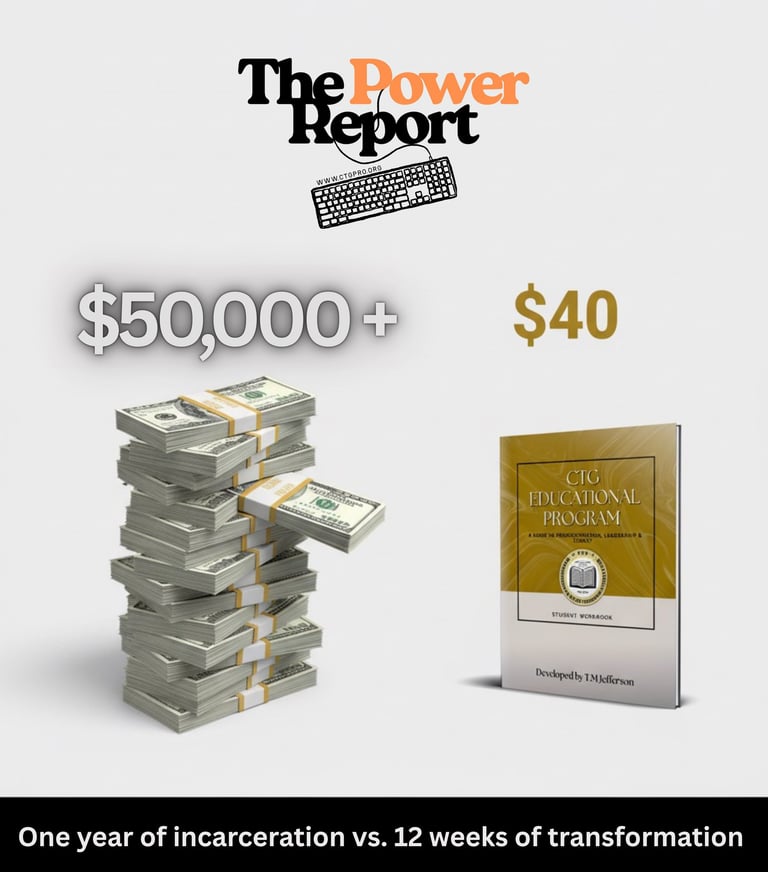
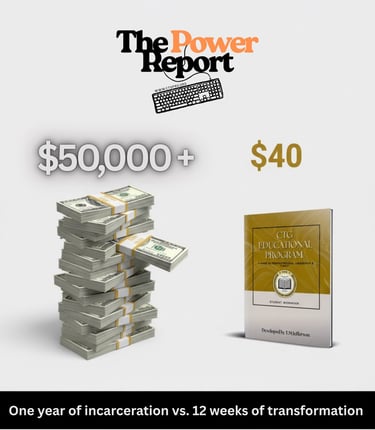
The Federal Bureau of Prisons spends an average of $35,000 per year to incarcerate one person. States collectively spend $80 billion annually on the entire system.
Pell Grants now provide federal aid for college coursework, typically $6,000+ per student per year for multi-year programs.
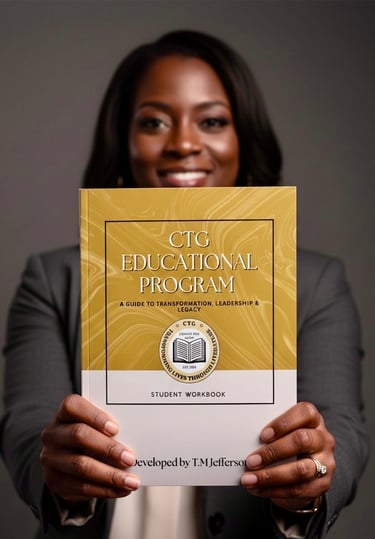
CTG delivers comprehensive identity transformation programming for $40 per person. Twelve weeks. Four modules. Complete curriculum. Workbook, assessment tools, certification.
Forty dollars.
I'm not arguing against college access. Education matters. But when we talk about "investing in reform," we need to be honest about return on investment.
If a two-year associate degree program costs $12,000+ in federal aid and still graduates people who see themselves the same way they did when they entered—we've spent money without creating transformation.
CTG costs $40 and changes the foundation everything else builds on.
The Disconnect
Federal initiatives announce sweeping reforms. States form task forces. Advocacy organizations celebrate expanded access.
Meanwhile, I'm running a GoFundMe asking for $12,000 to deliver transformation programming to 300 people across six cities because the system doesn't fund what actually works, it funds what looks good in press releases.
You want to know why recidivism rates haven't budged despite decades of programming? Because we keep doing more of what doesn't work while underfunding approaches that address root causes.

What Real Reform Looks Like
Real reform doesn't start with legislation or federal mandates. It starts with changing one person's understanding of who they are and what they're capable of.
That person influences their family. Their family impacts their community. Their community shifts culture. Culture eventually influences policy.
The CTG 2026 Tour won't make headlines the way Pell Grant reinstatement does. It won't generate the same press coverage as federal reforms or state task forces.
But it will change 300 individual narratives. Those narratives will ripple outward in ways no legislation can mandate.
The Choice
The system is already investing billions in cages, programming, and initiatives that produce marginal improvements.
I'm asking you to invest $40 per person in identity transformation that creates foundational change.
The headlines will celebrate the former. The latter will actually work.
Support the CTG 6-City Tour:
Change The Game Educational Program | www.ctgpro.org | Copyright (c) 2026